Cedar Shake Siding Cleaning in Westhampton, NY — How Soft Washing Restored This Hamptons Home
Quick Answer
Soft washing is the safest and most effective method for cleaning cedar shake siding. It uses low pressure and biodegradable cleaning solutions to break down oxidation, algae, and years of organic buildup — without damaging the wood underneath. For homes in Westhampton and across Suffolk County, Long Island, where coastal humidity speeds up this kind of weathering, soft washing is the method that protects the siding while restoring its natural look. K.O.S. Cleaning has been the trusted choice for cedar shake homes throughout the area since 2006.
If You Own a Cedar Shake Home in Westhampton, You Know This Feeling
The siding starts out beautiful. Warm tones, natural texture, that classic coastal character that makes these homes so distinctive along the East End of Long Island.
Then slowly, without you really noticing it happening, something changes. The color starts to go uneven. One side of the house looks darker than the other. Streaks appear. The cedar loses that warm, natural glow and starts to look almost gray — or worse, brownish-black in patches.
And then one day you step back and realize the house just doesn't look the way it used to. That feeling is frustrating, especially when you're not even sure what caused it or what the right fix is. We hear this from homeowners across Suffolk County all the time. The good news is: in most cases, it's completely reversible.
This Westhampton homeowner called us because they were dealing with exactly this. Here's what we found, how we handled it, and what you should know if your cedar siding is starting to look the same way.
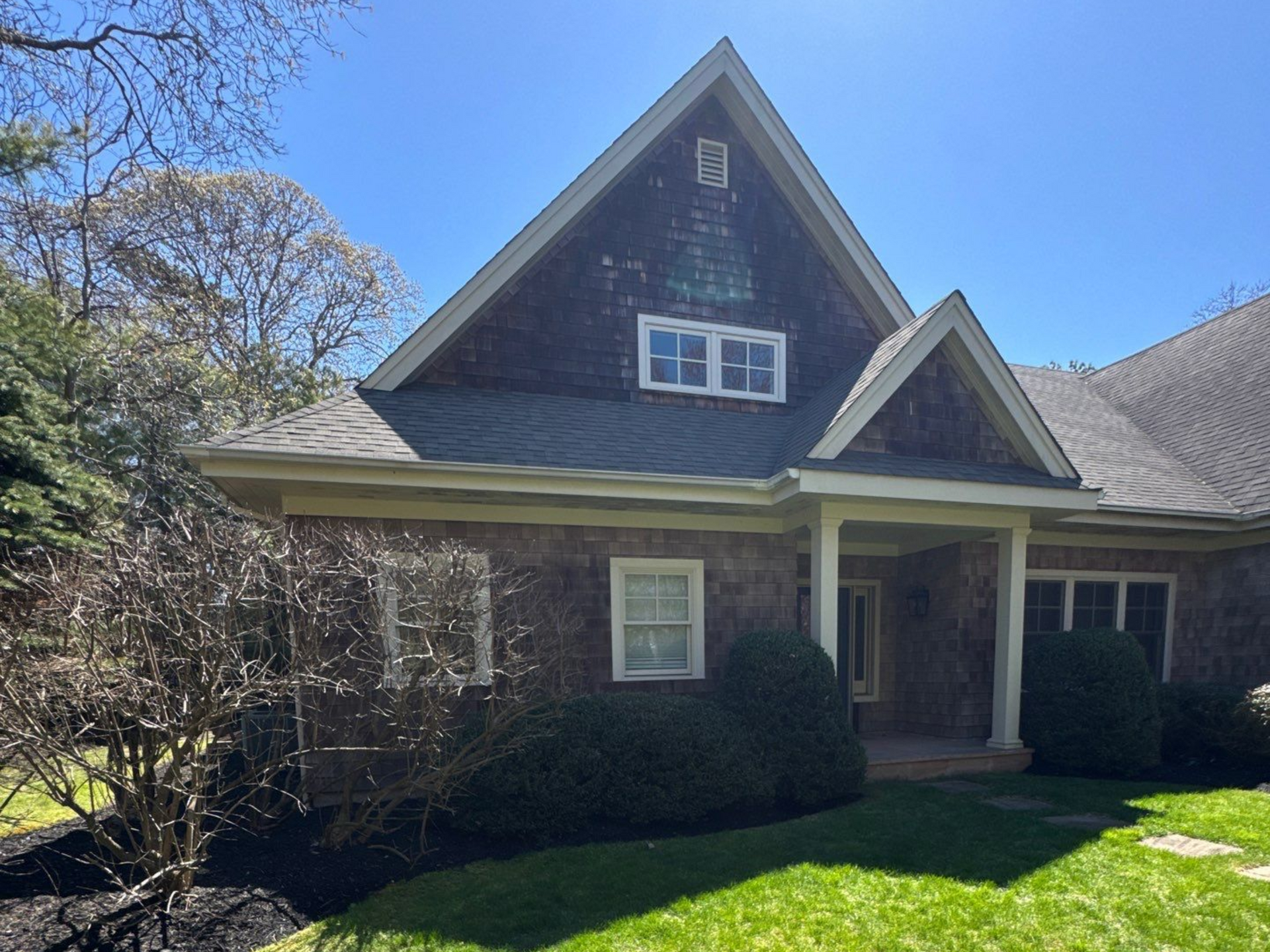
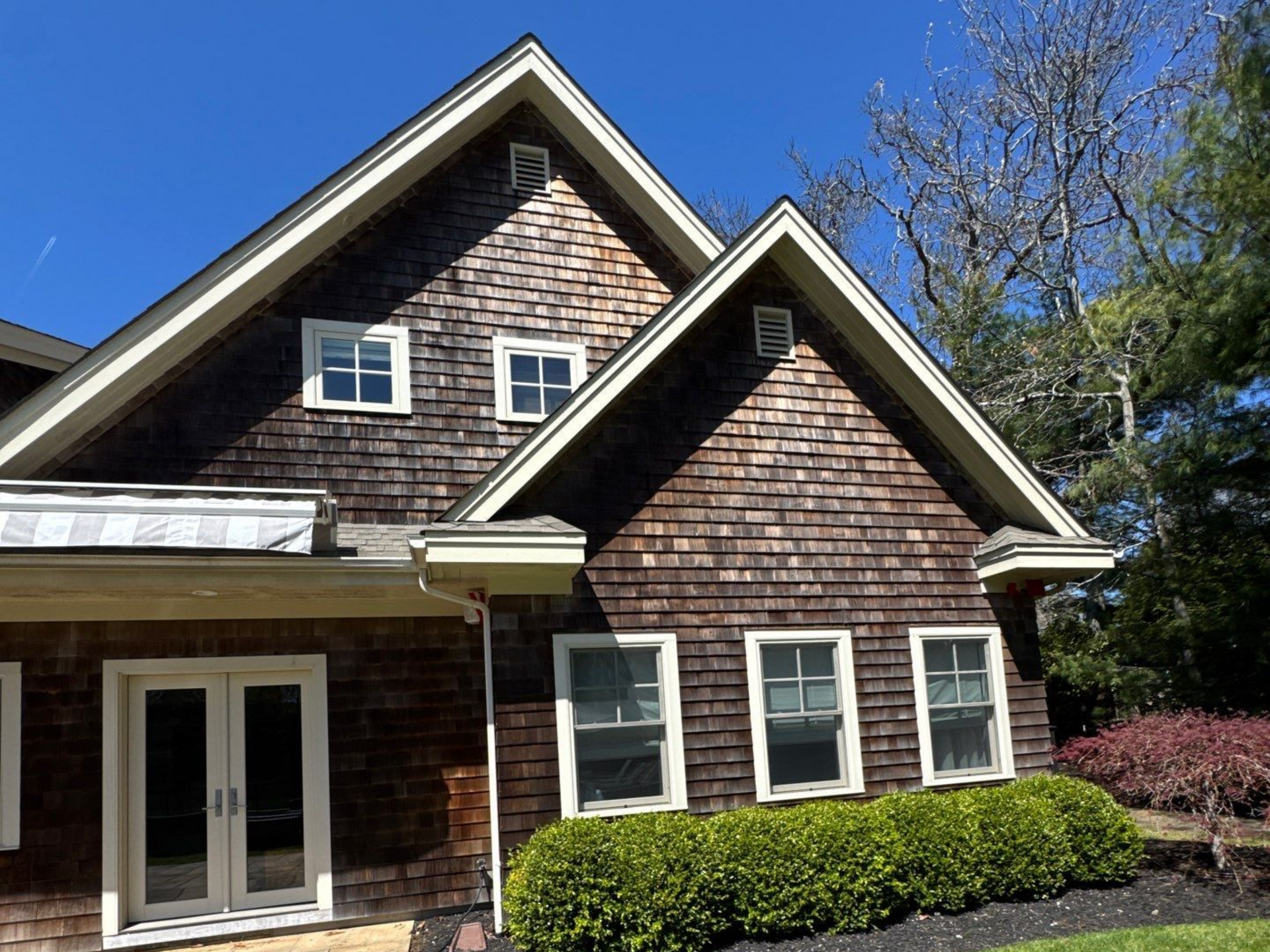
Front elevation showing heavy oxidation and darkening across cedar shake siding before soft washing
What Was Happening at This Property
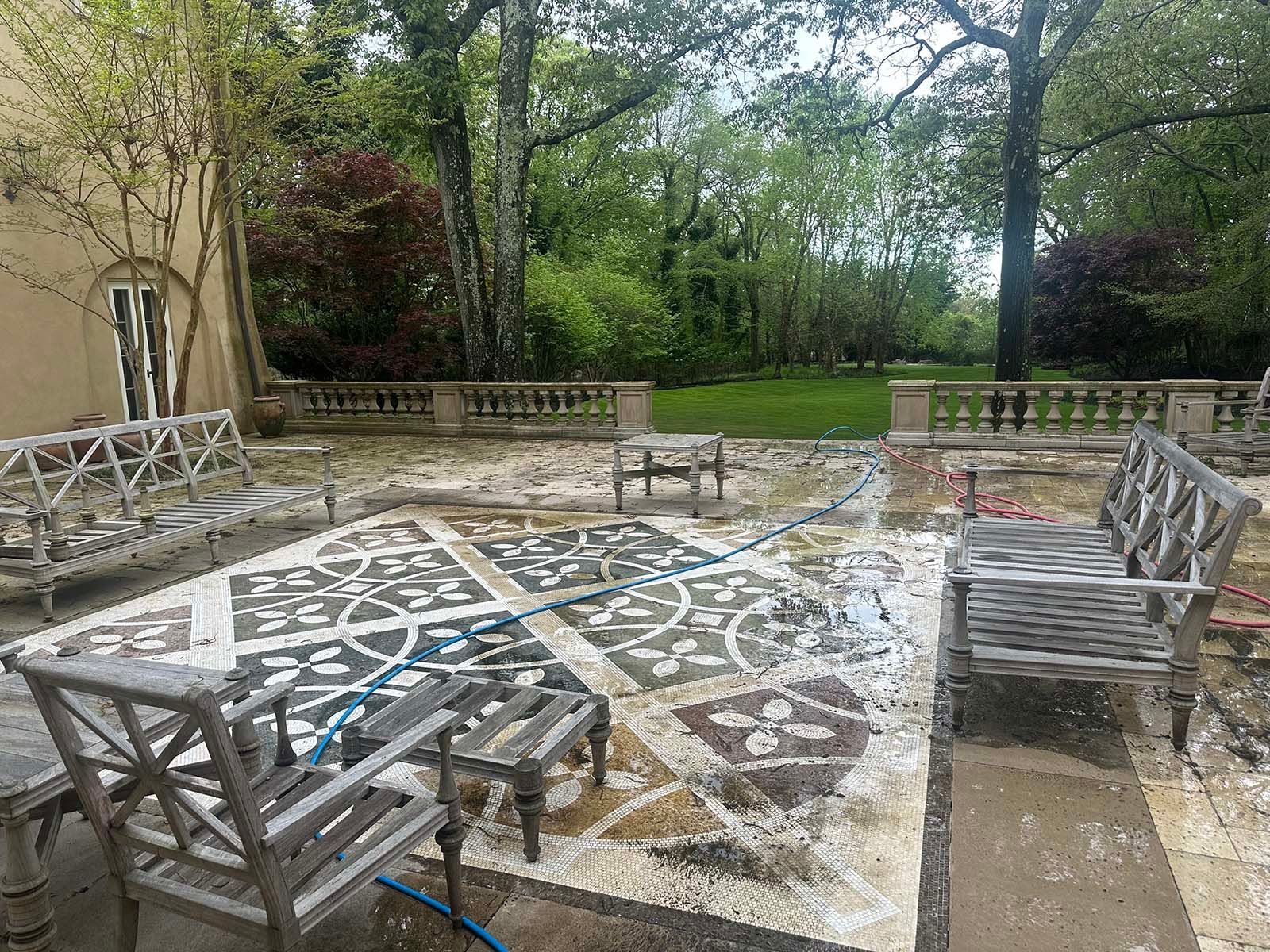
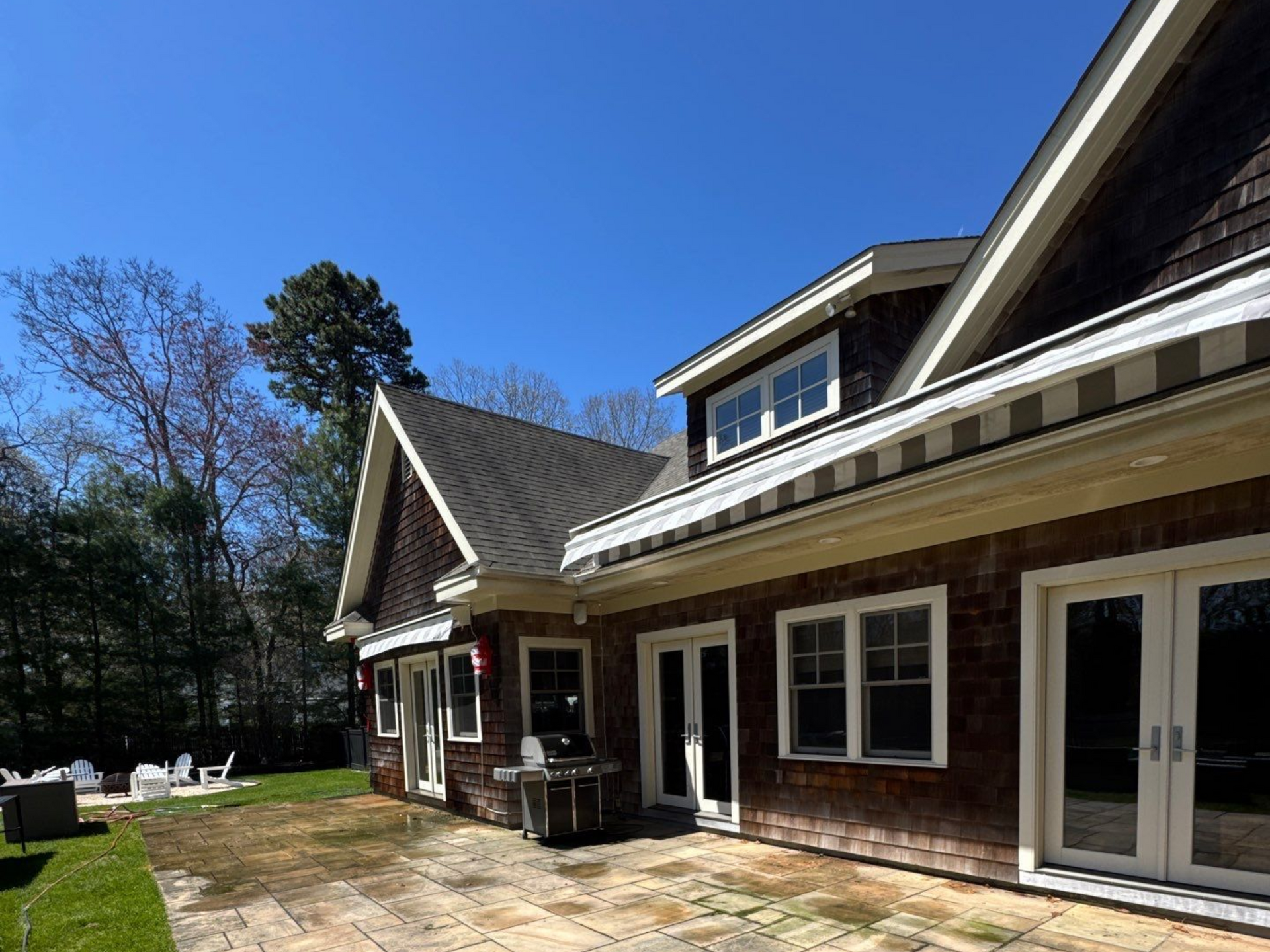
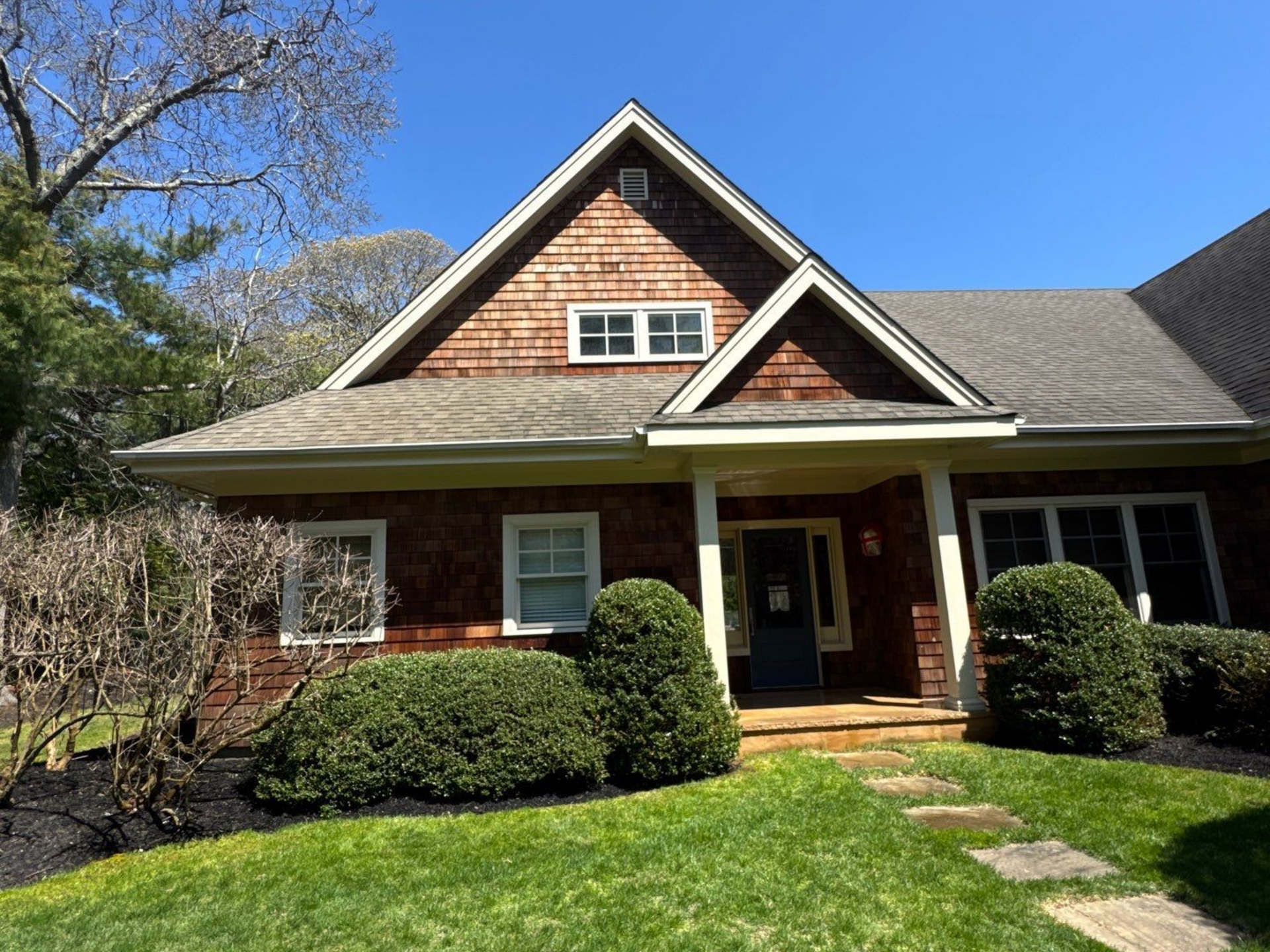
This was a large, high-end home in Westhampton with cedar shake siding across multiple elevations, a full bluestone patio off the back, and a series of flagstone stepping stones through the yard. The homeowner had noticed the siding darkening unevenly — some sides significantly more affected than others — along with visible staining on the patio and algae growth beginning to take hold on the stepping stone path.
This is a very common pattern on Suffolk County homes, particularly as you get closer to the water. Coastal humidity, seasonal shade from mature trees, and north-facing walls create the conditions where organic buildup accelerates faster than most homeowners expect.
What looked like simple weathering was actually a combination of oxidation from UV exposure, algae and biological growth from moisture retention, and years of surface buildup that regular rain simply doesn't wash away.
Back elevation showing stained patio and darkened siding prior to cleaning
Why Cedar Shake Siding Darkens Over Time
Cedar is a beautiful, natural material — but it's also porous and reactive to its environment. Left untreated and uncleaned, it goes through a predictable cycle.
UV exposure breaks down the surface fibers and causes oxidation, which is what produces that gray or blackened tone. Meanwhile, moisture trapped in shaded areas creates ideal conditions for algae and organic growth. The two processes work together, and the result is siding that looks decades older than it is.
On Long Island, that process happens faster than in drier climates. The combination of ocean air, humidity, and seasonal shade from surrounding trees means cedar shake homes here need consistent maintenance — typically every one to three years — to stay looking the way they should.
Ignoring it doesn't just hurt curb appeal. Over time, organic growth can work into the wood and actually accelerate deterioration. Cleaning it correctly isn't just cosmetic — it's part of protecting the material itself.
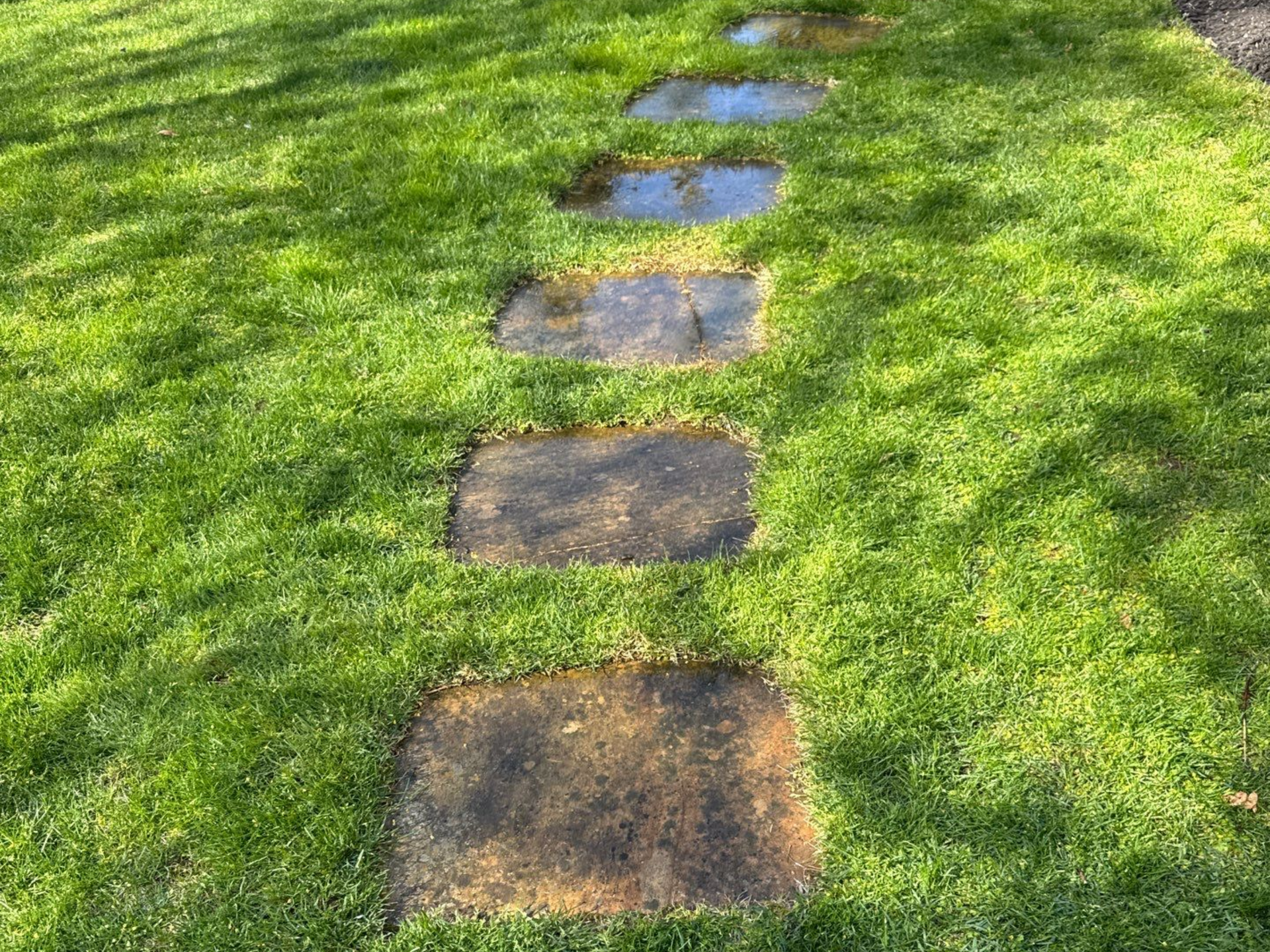
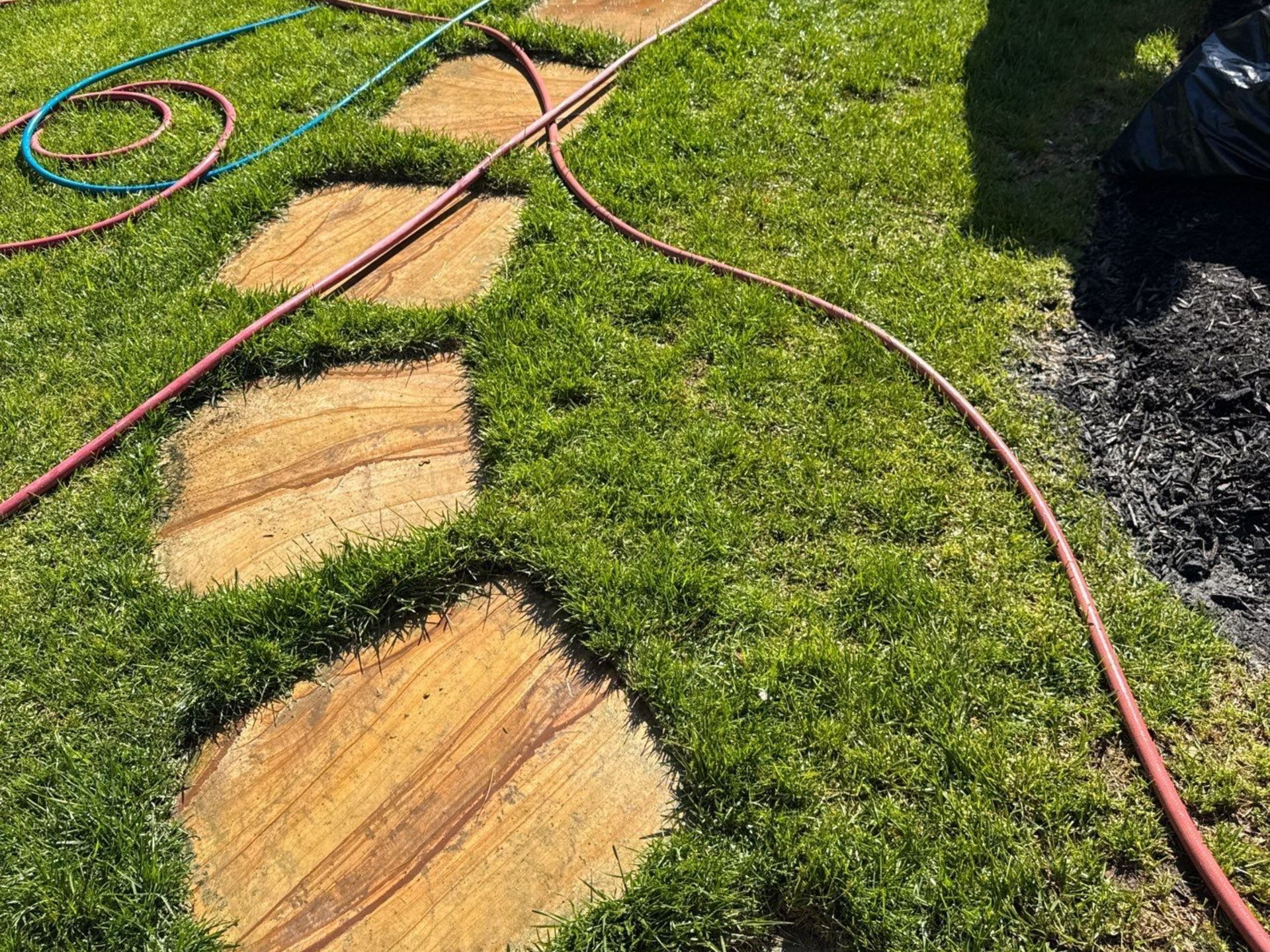
Stepping stone path showing algae and organic buildup before treatment
Why Pressure Washing Is the Wrong Answer for Cedar
This is the part that trips up a lot of homeowners, and honestly, we understand why. Pressure washing feels like the obvious solution. It's powerful, it cleans things — what's the problem?
The problem is cedar shake. High-pressure water on wood siding doesn't clean it the way it cleans concrete. It splinters the surface fibers. It can force water behind the shakes and into the wall cavity. It strips the protective layer of the wood unevenly, leaving you with a finish that looks worse than before — and damage that can't be undone.
We've seen it happen on homes where a homeowner or a less experienced crew used a pressure washer on cedar. The immediate aftermath sometimes looks okay. But within a season, the wood has deteriorated in ways that are expensive to address. Soft washing exists specifically to handle this. It cleans the surface without damaging it.
What We Did: The Soft Washing Process
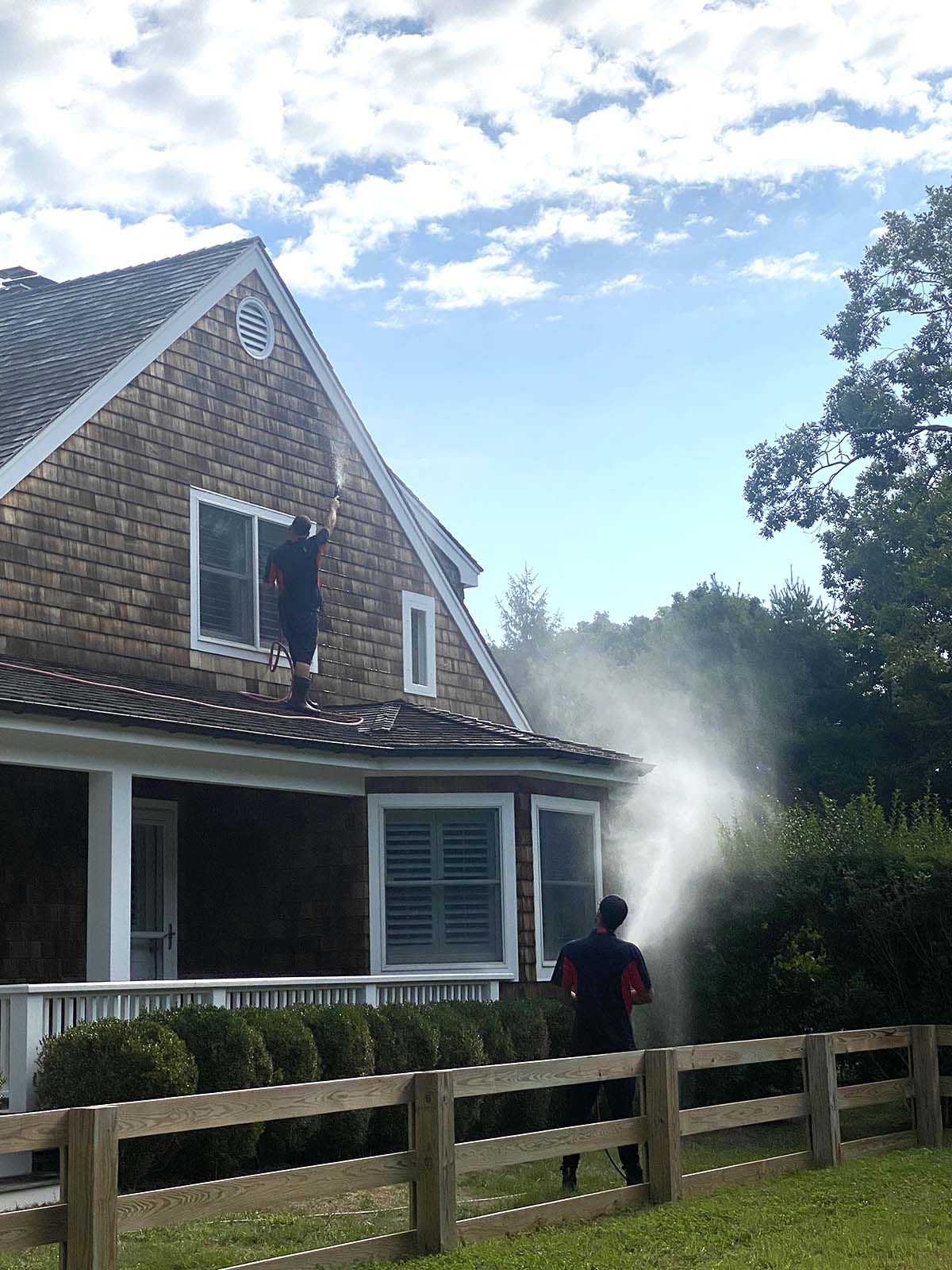
For this Westhampton project, the scope covered the full cedar shake exterior across all elevations, the large bluestone patio, and the flagstone stepping stone path through the yard.
On the siding, we applied industry-grade biodegradable cleaning solution to every surface, allowing it proper dwell time to break down the oxidation and organic buildup at the source rather than just rinsing the surface. That dwell time is what separates a real clean from a surface rinse. We then followed with a low-pressure rinse calibrated for cedar — enough to clear the solution and the loosened buildup, not enough to stress the wood.
For the patio and stepping stones, we used a surface cleaner attachment to work through the flagstone evenly, removing the algae staining and years of embedded surface grime. The difference on hardscapes tends to be dramatic — you're often restoring a color and texture the homeowner hadn't seen in years.
The Results
The difference across the cedar shake was exactly what we aim for — the warm, even tone came back across all elevations. The dark patches cleared. The wood looked like itself again rather than like a neglected surface.
The patio and stepping stones came up clean as well, which matters because a clean house next to stained hardscapes undercuts the whole result. The property looked restored end to end.
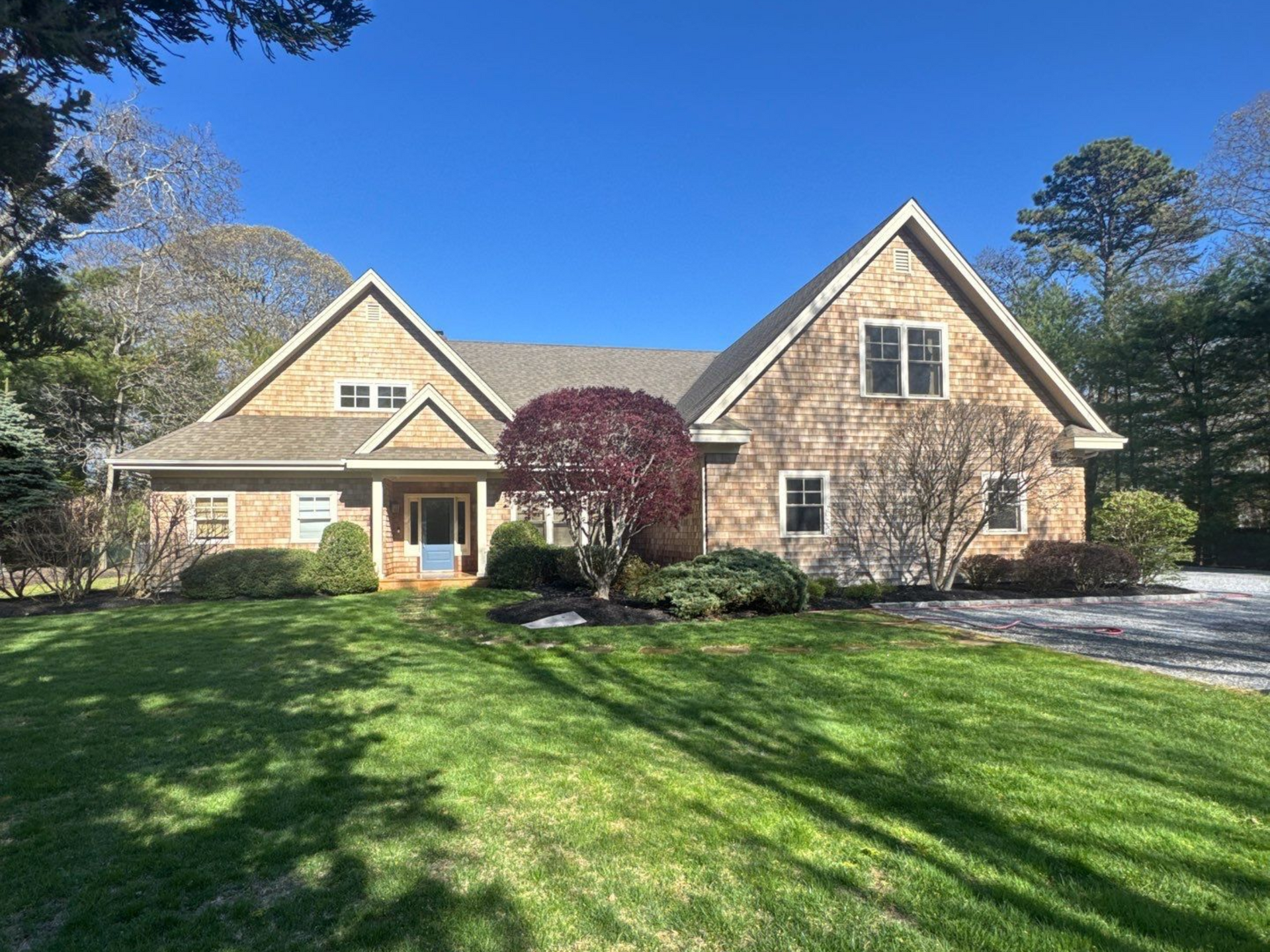
Front elevation after soft washing — warm cedar tones fully restored
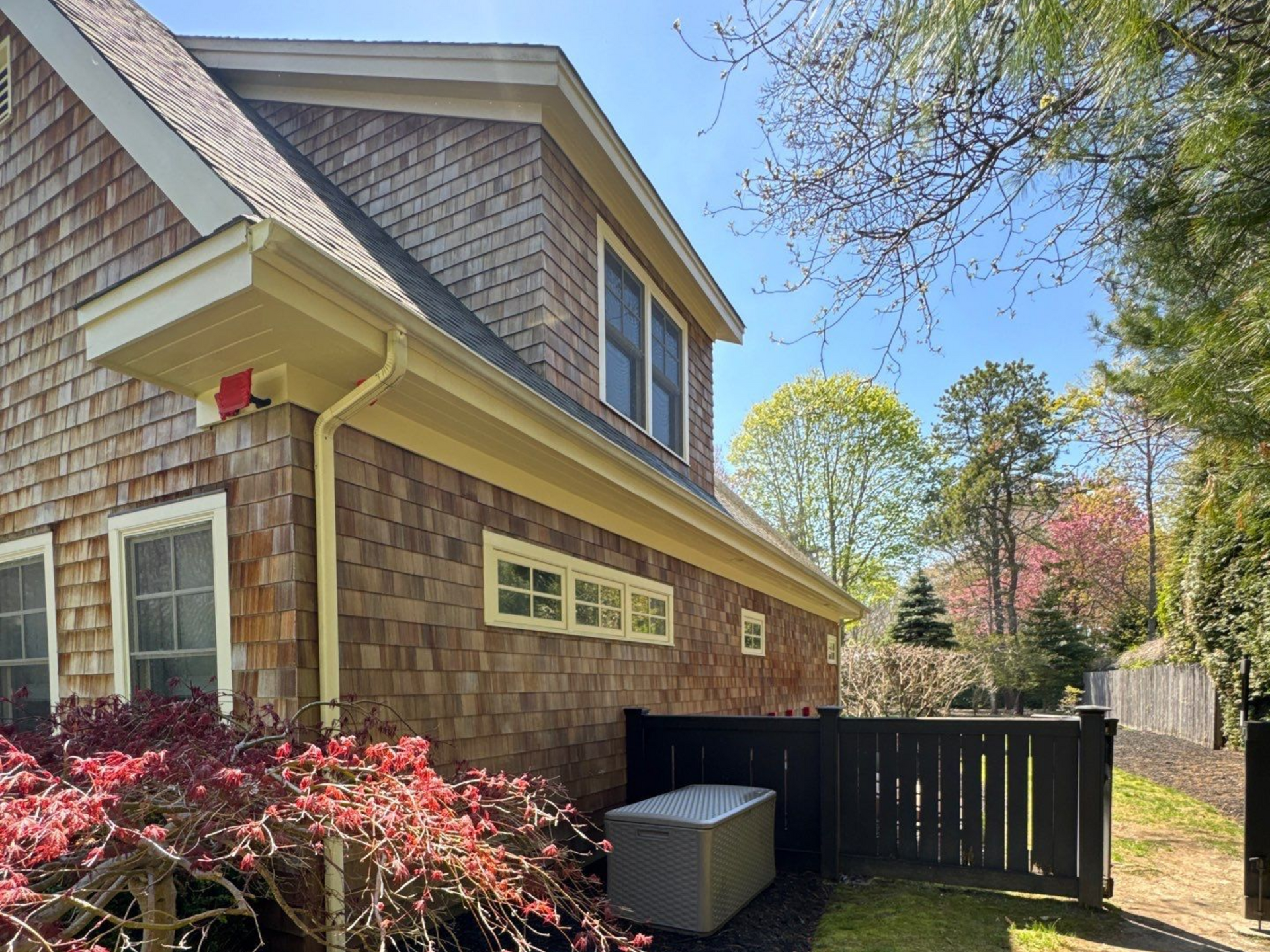
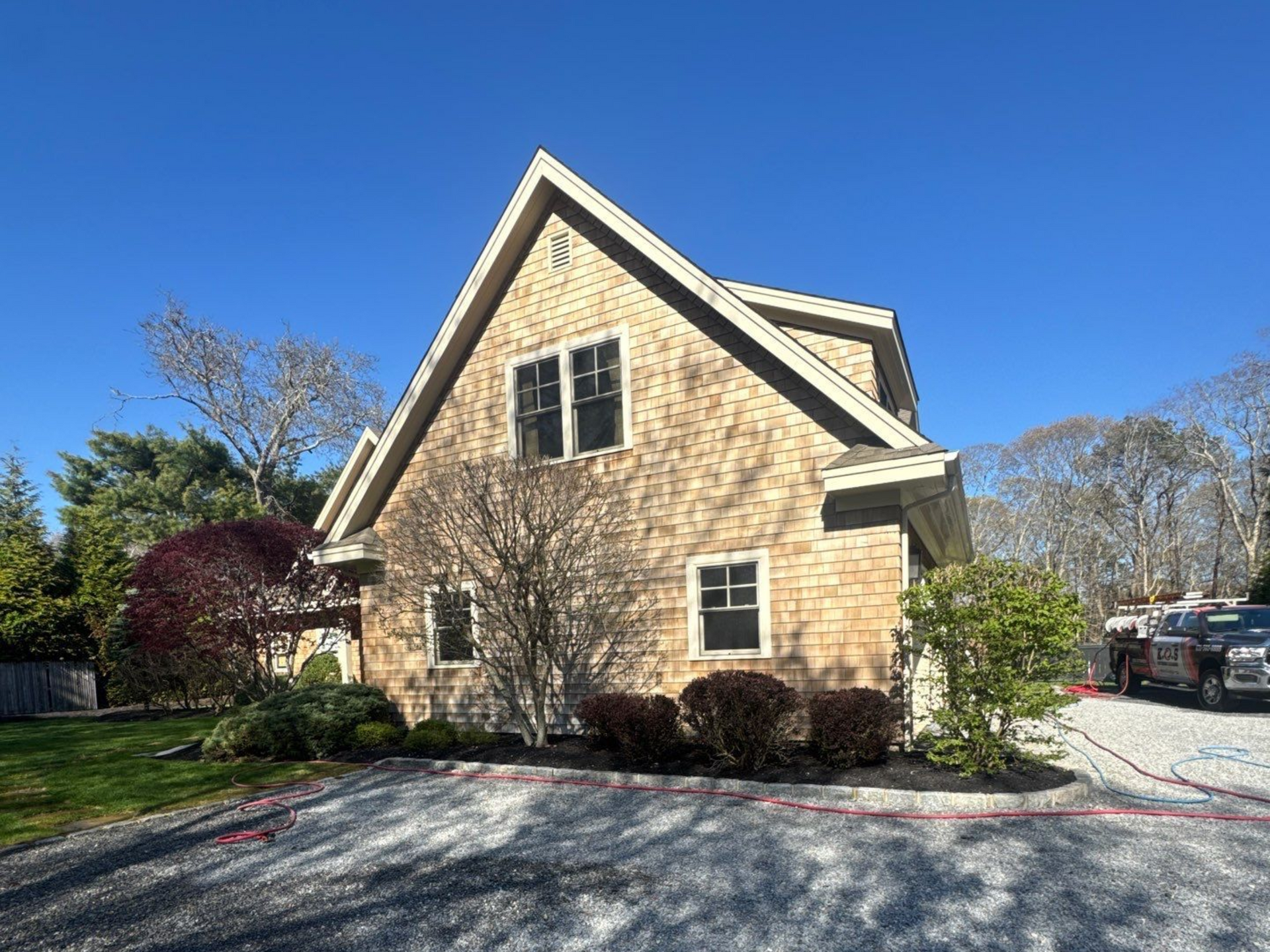
Side elevation showing even, restored cedar color post-cleaning
How Often Should Cedar Shake Be Cleaned on Long Island?
For most homes in Suffolk County, every one to three years is the right window. The variables are shade exposure, proximity to water, and how much tree coverage surrounds the house. North-facing walls almost always need attention sooner than south-facing ones.
Early spring — before outdoor season begins — is the ideal time. You get a clean exterior going into the months when you're actually using the outdoor spaces and when curb appeal matters most. That timing also lets any residual moisture from the cleaning fully dry before summer heat sets in.
If you're noticing any darkening, green tinge, or uneven coloration on your cedar, don't wait another season. The longer biological growth establishes itself on the wood, the more work it takes to reverse.
Ready to Restore Your Cedar Shake Siding?
We know how it feels to watch a home you've invested in start to lose its look — and to not be sure what the right move is. That uncertainty keeps a lot of homeowners waiting longer than they should.
K.O.S. Cleaning has been serving cedar shake homes across Suffolk County, Long Island since 2006. We know this material, we know this climate, and we know what it takes to restore it without causing damage. Every job we do comes with our commitment to the most thorough cleaning ever — with zero hidden fees.
If your cedar siding is starting to show its age, give us a call. We'll take a look, tell you honestly what's going on, and recommend the safest path forward. No pressure, no guesswork.
Contact K.O.S. Cleaning for a free cedar shake cleaning estimate in Westhampton or anywhere in Suffolk County, Long Island.
📞
(631) 560-8999
Frequently Asked Questions
Is soft washing safe for cedar shake siding?
Yes — soft washing is specifically designed for delicate wood surfaces like cedar shake. It relies on low pressure and biodegradable cleaning solutions to break down oxidation and organic buildup rather than blasting the surface with force. For cedar shake homes across Suffolk County, it's the only method we recommend. High pressure on wood can cause permanent fiber damage that no amount of cleaning can fix afterward.
How do you remove oxidation from cedar shake siding?
Oxidation on cedar requires a chemical treatment, not just water pressure. We apply a professional-grade cleaning solution that penetrates the surface buildup and breaks it down at the source. After proper dwell time, a low-pressure rinse clears everything away. The result is the natural cedar tone returning rather than a surface that's simply been rinsed off the top.
Can pressure washing ruin cedar shake siding?
It can, and in our experience working across Long Island since 2006, it frequently does. High-pressure water splinters the surface wood fibers, can force moisture behind the siding into wall cavities, and strips the protective layer of the wood unevenly. The damage isn't always obvious immediately, but it accelerates deterioration and can create problems that are costly to address down the road. Soft washing avoids all of that.
How long does soft washing cedar shake last?
For most homes in Suffolk County, a soft wash treatment on cedar shake holds well for one to three years. Factors that affect longevity include shade exposure, proximity to water, tree coverage, and which elevations face north. We typically recommend reassessing annually and cleaning every one to three years depending on what you're seeing on the surface.
Your Top Rated Cleaning Specialists
"We guarantee the most thorough cleaning ever, all with zero hidden fees"
Schedule Your Free Estimate
Tell Us A Little About Your Cleaning Needs At Your Home Or Business