Why Patios Turn Green (And How to Fix It the Right Way)
Patios turn green because of algae, mold, and organic buildup that thrive in damp, shaded environments. After winter, moisture, debris, and limited sunlight create the perfect conditions for this growth to spread across concrete, pavers, and stone surfaces. The right cleaning method depends on the material, but most patios require professional pressure washing combined with proper treatment to fully remove and prevent buildup.
If your patio is starting to look green, you're not alone.
We see it all the time across Suffolk County, especially this time of year. You walk outside after a long winter and suddenly the space where you spent last summer looks dull, stained, and honestly a little embarrassing. Maybe you've tried hosing it down. Maybe you've been putting it off because you're not sure it's even worth tackling. Either way, that green layer you're looking at isn't just surface dirt — and if you don't handle it the right way, it's going to keep coming back.
What Actually Causes Patios to Turn Green?
That green film isn't grime that built up from foot traffic or weather exposure alone. It's typically a combination of algae, mold, mildew, and organic growth that thrive specifically in damp, shaded conditions. After extended periods of rain or snow — exactly what Long Island winters deliver — moisture settles into the surface and never fully dries out between weather events. When that cycle repeats over several months, the result is the kind of buildup that feels like it happened overnight but has actually been developing since fall.
Why It's Especially Common on Long Island
Homes across Suffolk County deal with conditions that make this problem particularly persistent. Patios that don't receive direct sunlight, or that sit close to trees and landscaping, stay damp far longer after rain than surfaces in open areas. North-facing corners, edges near mulch or grass, and low spots with poor drainage hold moisture in a way that actively invites growth. Once it takes hold, it spreads quickly — and the spring thaw is when it becomes most visible, just as you're starting to use your outdoor space again.
Why a Green Patio Is More Than an Eyesore
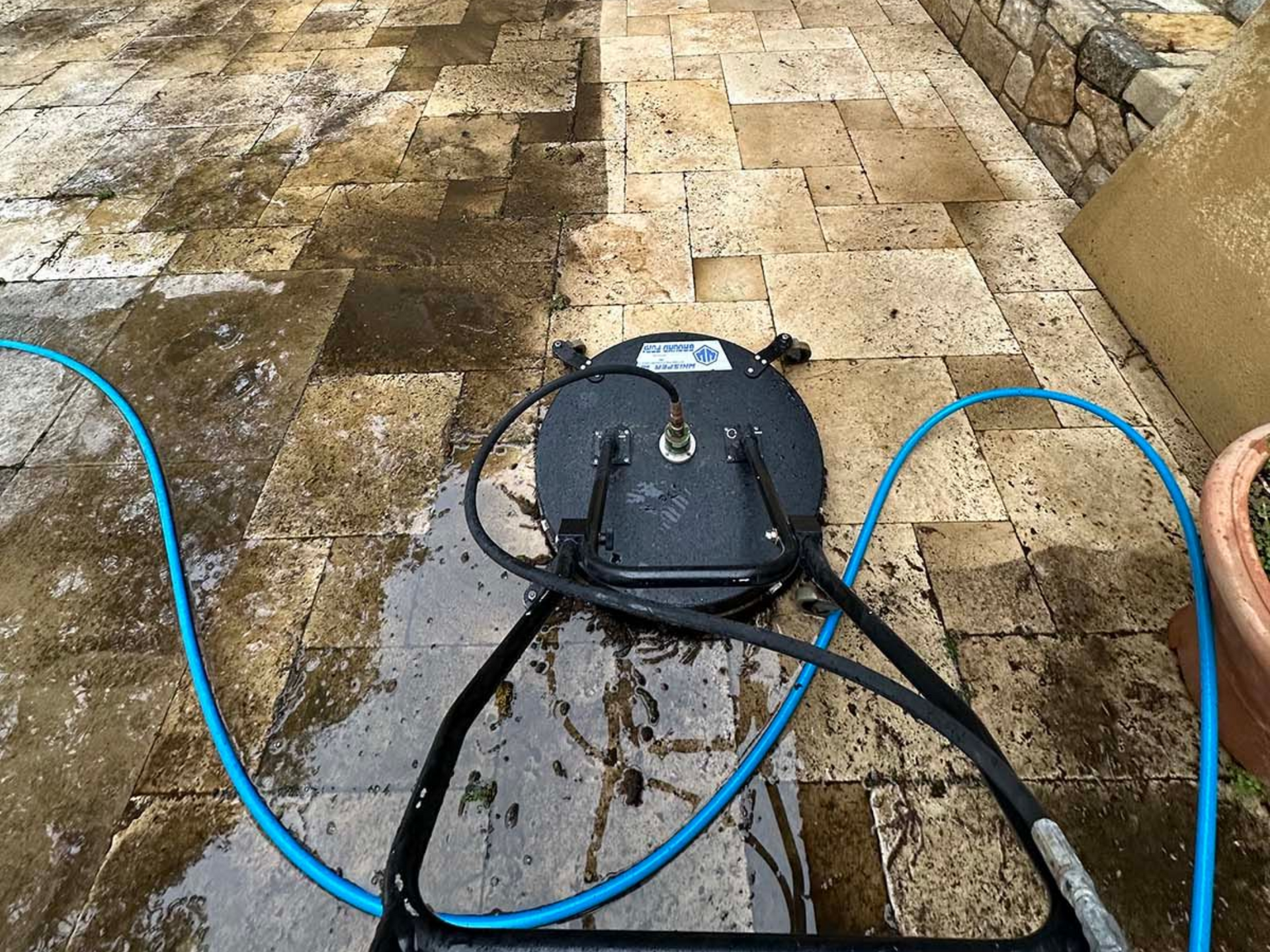
At first it just looks bad. But over time, that green layer becomes a genuine safety issue. Algae-covered concrete and pavers get dangerously slippery when wet — especially on pool decks, walkways, and surfaces where people are moving around barefoot or in sandals. The longer you wait, the deeper the growth embeds itself into the pores of the material, making it progressively harder to remove with any basic cleaning approach. A garden hose or quick rinse might lighten it for a few weeks. It's not fixing the problem — it's delaying it.
Can You Just Pressure Wash It?
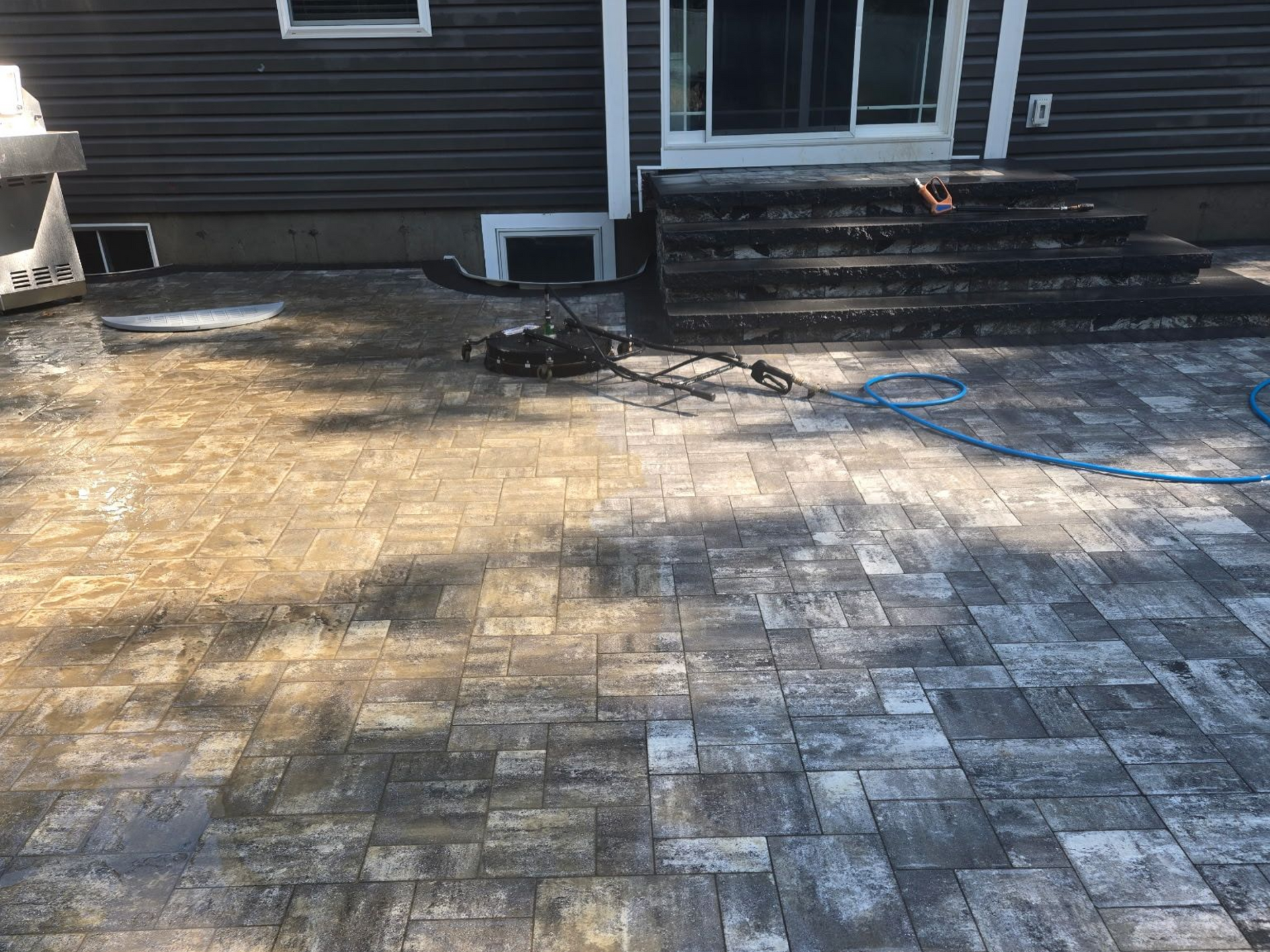
This is where most homeowners go wrong. Pressure washing can absolutely be effective, but only when used properly and with the right settings for the specific surface you're working with. Too much pressure on pavers strips the joint sand between them, leaving gaps that invite weeds and future damage. On natural stone or certain composite surfaces, aggressive washing can etch or streak in ways that are permanent. The power isn't the problem — it's applying it without accounting for the material underneath.
The Right Way to Clean a Green Patio
To actually fix the problem, you need to do more than blast the surface. It means breaking down the organic growth at its source, cleaning the entire surface evenly rather than spot-treating the obvious patches, and using the right approach for the material you're working with. Concrete, pavers, natural stone, and composite surfaces all respond differently, and what works on one can damage another. The goal isn't just to remove what's visible. It's to treat what's causing the buildup and slow the cycle down before it starts again.
How to Prevent Your Patio From Turning Green Again
You can't stop nature entirely, but you can slow it down significantly. Keeping the area clear of leaves and debris, trimming back trees or shrubs that block sunlight from reaching the surface, improving drainage where water tends to pool, and scheduling regular professional cleanings each season makes a real difference. On Long Island, where the climate is nearly ideal for this kind of growth, consistent maintenance isn't optional — it's what keeps your outdoor space looking the way it should through the warmer months and into fall.
When Is the Best Time to Clean Your Patio?
Spring is the ideal window, and right now is exactly when most Suffolk County homeowners walk outside and realize just how much accumulated over the winter. After months of rain, snow, and organic debris sitting on the surface, the buildup is at its worst. That's also when it matters most — when you're getting back outside, when guests are coming over, when you want the space to actually look good. Cleaning it early in the season prevents the problem from compounding as temperatures rise and humidity stays high through summer.
Get Your Patio Ready for the Season
We understand how frustrating it is to look at your patio and feel like no matter what you try, it just doesn't look clean. The good news is this is one of the most common issues we see across Suffolk County — and it's completely fixable with the right approach and the right team.
K.O.S. Cleaning has been serving Suffolk County homeowners since 2006, and we know exactly how Long Island's climate affects outdoor surfaces through the seasons. When we clean a patio, we use the proper method for the material, treat the underlying growth, and make sure the results hold. And we do it with zero hidden fees — just the most thorough cleaning your outdoor space has ever had.
If your patio is starting to turn green, now is the time to take care of it. Request your estimate today and get your home ready for the season. Call (631) 560-8999 today.
Frequently Asked Questions
Why does my patio turn green every year?
Patios turn green due to recurring moisture, shade, and organic buildup that create ideal conditions for algae and mold growth. Without regular treatment and cleaning, the cycle repeats each season.
Is the green stuff on my patio dangerous?
It can be. Algae and mold make surfaces slippery and unsafe when wet — a real hazard on walkways, pool decks, and any outdoor area where people are walking regularly.
Will pressure washing remove green algae from my patio?
Yes, but only when done properly. Incorrect pressure or technique can damage pavers, strip joint sand, or leave uneven results. The right method depends entirely on the surface material.
How often should I clean my patio?
Most patios benefit from professional cleaning at least once a year, ideally in spring after winter buildup. Properties with heavy shade or poor drainage may need attention more than once per season.
Your Top Rated Cleaning Specialists
"We guarantee the most thorough cleaning ever, all with zero hidden fees"
Schedule Your Free Estimate
Tell Us A Little About Your Cleaning Needs At Your Home Or Business